
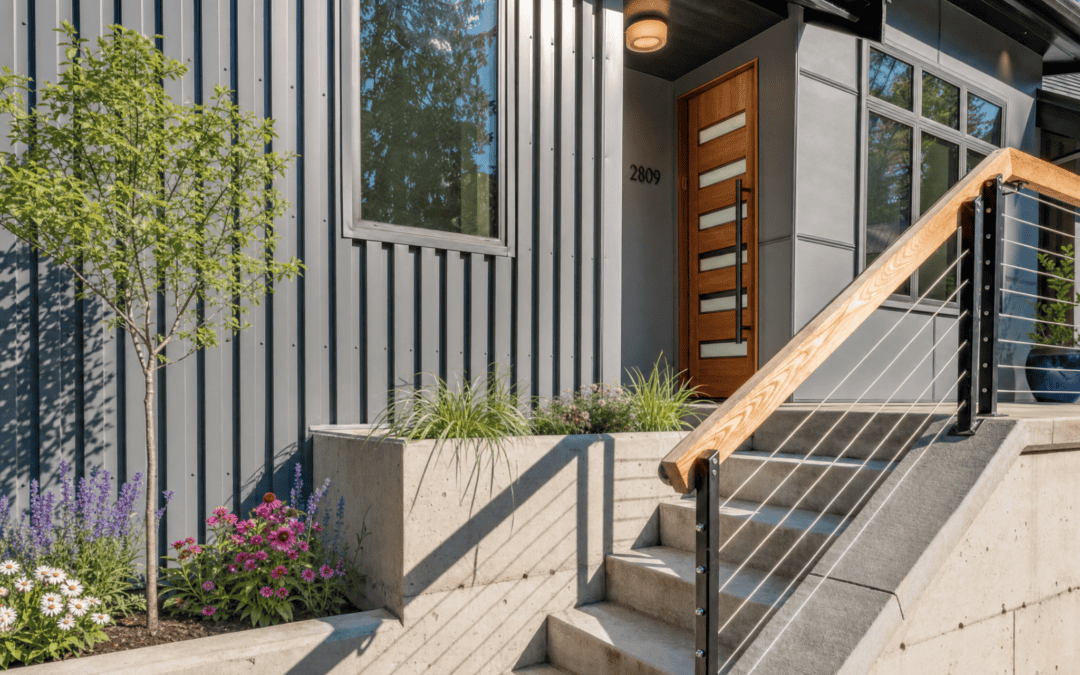
Metal siding is a good fit for homeowners who want a long-lasting exterior and are willing to choose the material carefully instead of treating every metal product the same. Steel, aluminum, zinc, and copper can all protect a home for decades, but they handle impact, corrosion, heat, and moisture differently.
The first decision is not color. It is which metal, which panel profile, and which coating make sense for the building and the conditions around it.
Metal Siding Is a Category, Not One Product
Residential metal siding can be made from steel, aluminum, zinc, or copper. The quality of the finished job also depends on panel thickness, coating, fastening, trim, and installation. Two products can both be called metal siding and perform very differently over a lifetime.
That distinction is easy to miss during an online search. A low cart price can make one product look attractive, but the panel itself is only part of the system. Corners, flashing, fasteners, trim, custom length requirements, and wall preparation still have to work together.
Unlike wood, metal does not rot or feed termites. It also does not support mold as a food source, although trapped moisture behind any siding can still create mold problems in the wall assembly. The siding should shed water and protect the structure, not become a substitute for proper drainage.
Types of Metal Siding for Residential Homes
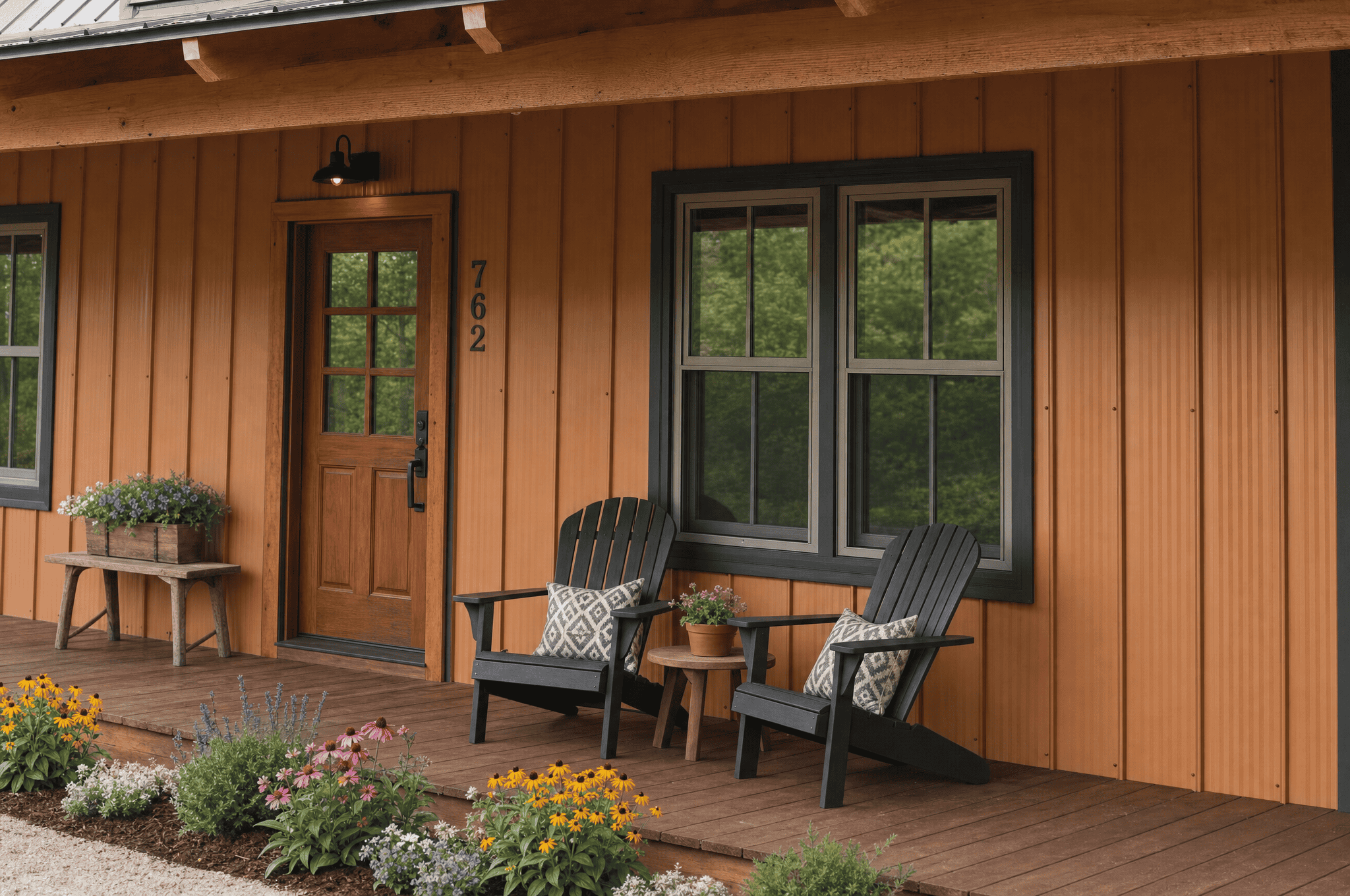
Steel Siding
For most residential projects, steel siding deserves the first look. It is durable, available in a broad range of painted finishes, and strong enough to handle wind, debris, and everyday exterior abuse better than many lighter products.
Steel siding is usually a better practical choice than specialty metals when the goal is a full-home installation rather than a small architectural accent. Insulated steel siding can add a bonded foam backing, which stiffens the panel and can improve thermal performance as part of the wall assembly.
Steel does have one weakness that should not be ignored: exposed steel can rust. Scratches, cut edges, and damaged coatings need to be handled according to the product requirements. Good steel siding is not maintenance-free; it is low maintenance when the coating stays intact.
Aluminum, Zinc, and Copper
Aluminum siding is lighter than steel and does not rust, making it attractive for damp or corrosion-prone settings. It can dent more easily, especially in thinner gauges, so thickness and panel quality matter. Homeowners interested in this option should compare it separately in Aluminum Siding: Benefits, Drawbacks & Design Options rather than assuming aluminum behaves like steel.
Zinc takes a different approach. It naturally develops a protective patina and can perform well in damp or marine environments. If you live near the ocean, corrosion exposure should be part of the product decision from the start. Saltwater can destroy the wrong metal finish quickly.
Copper is durable and develops its own patina, but it is usually an architectural material rather than the default choice for an entire residential exterior. It makes sense when the appearance itself justifies the premium product and the rest of the home is designed around it.
How Durable Is Metal Siding?
A properly selected metal siding system can remain serviceable for decades, depending on the metal, coating, exposure, and maintenance. “Metal lasts forever” is not a useful way to shop for it.
Steel siding handles harsh weather well, and metal does not rot the way wood can. Many products also contain recycled material and remain recyclable at the end of their service life. The Metal Construction Association identifies recycled content, recyclability, low maintenance, and long-term durability among the advantages of residential metal wall systems.
Fire resistance is another legitimate advantage, but homeowners should not reduce that to “metal siding is fireproof.” FEMA notes that metal siding can transmit heat, which means insulation, separation from combustible materials, and the rest of the wall assembly still matter.
Impact is the tradeoff. Hail, ladders, branches, or equipment can dent metal siding panels. A dent may be cosmetic, or it may justify replacing a panel if the coating or panel connection is damaged.
Metal Siding Panels and Profiles Change the Look
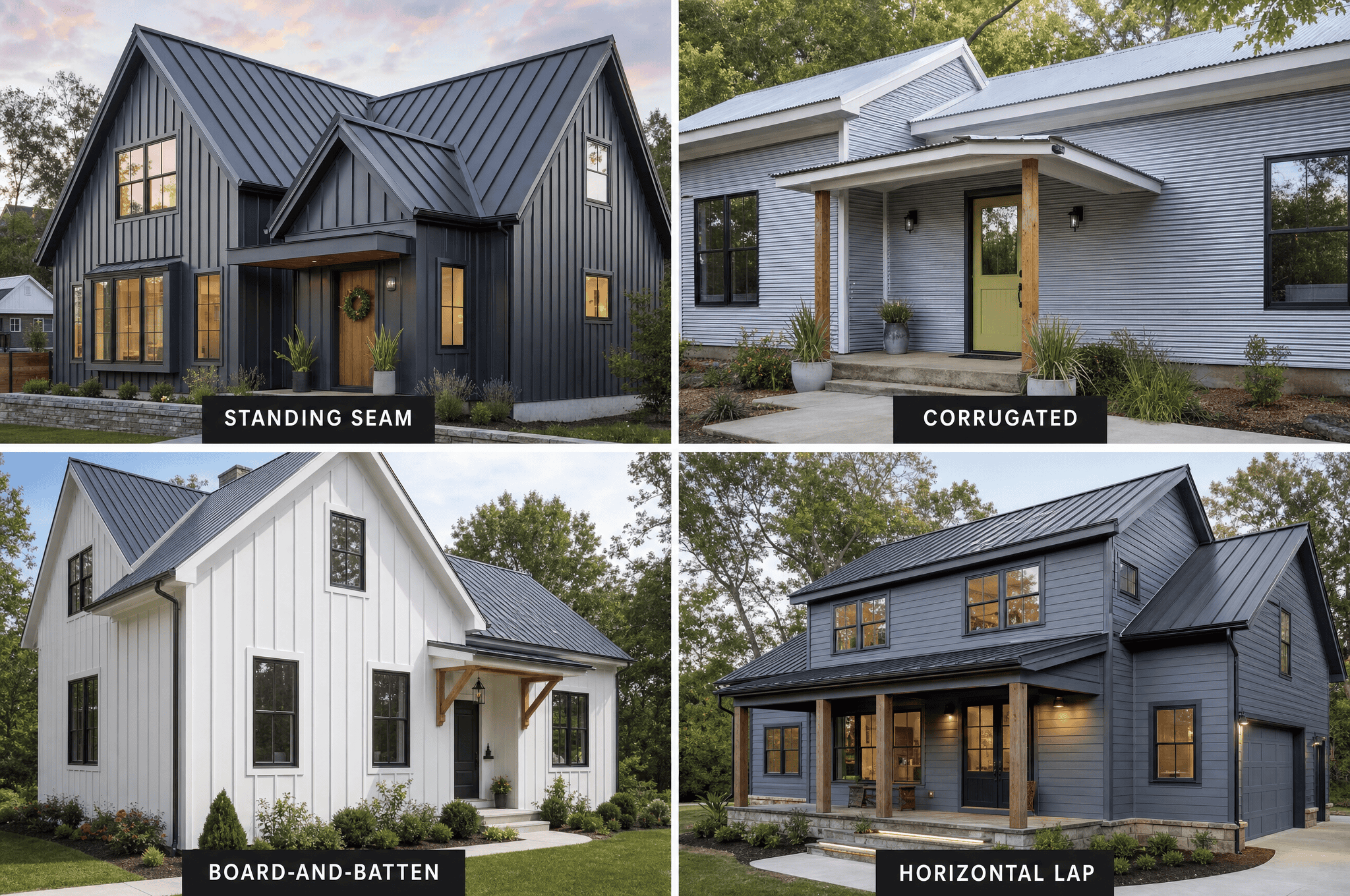
Metal siding panels can look clean and residential or look like a utility building. The profile makes a huge difference.
Standing seam creates long vertical lines and is ideal for contemporary homes when the proportions are right. Corrugated metal has more visible repetition and can lean modern, industrial, rustic, or agricultural depending on the rest of the building. Color, panel length, window placement, and trim determine whether the finished exterior feels intentional.
Metal can also be formed into familiar residential profiles:
- Board and batten: Vertical panels with raised batten lines create depth and strong vertical emphasis. The board-and-batten look adds height without relying on traditional wood boards.
- Lap and Dutch lap siding: Horizontal profiles create a more conventional residential appearance, while Dutch lap adds a recessed cove and stronger shadow line.
- Shiplap siding: Depending on the product, panels can run vertically, horizontally, or diagonally.
- Shake siding: Formed metal panels replicate some of the texture of hand-split cedar shakes.
A sample board will not tell you how a full wall will read. Before making a final choice, look at completed homes using the same product, color, panel width, and orientation whenever possible.
Where Metal Siding Can Go Wrong
The most common mistake is choosing a metal based on appearance before checking the environment.
A painted steel panel may perform extremely well inland and be the wrong product near heavy ocean exposure. Coastal salt can accelerate corrosion, so the finish, fasteners, cut edges, and warranty requirements all need to match the location. Zinc and certain aluminum products may be better suited to marine conditions, but the manufacturer information still needs to be checked.
Noise is another concern that gets oversimplified. Rain on a bare metal building can be loud. Rain on a properly insulated residential wall with sheathing and a complete siding assembly is a different situation. The wall design, not just the surface material, controls how much sound reaches the interior.
Heat works the same way. Metal transfers heat readily, so insulation and wall design matter. Insulated steel siding can help, but it should not be treated as a replacement for a properly designed thermal envelope.
This is also where Composite Siding: Benefits, Materials & Considerations becomes a useful comparison. Metal is not automatically the best choice because it sounds tougher. If impact resistance, corrosion exposure, or a softer residential appearance is the priority, another siding material may be the better call.
How to Compare Metal Siding Products Before You Buy
Do not start by adding panels to an online cart.
A supplier cart can show a product price, but it usually cannot tell you whether you have the right gauge, trim package, fastening system, finish, or quantity for the job. If you discover a product during an online search, use that information to start the conversation, not to finish the purchase.
Ask the contractor or sales representative to provide the manufacturer name, product line, thickness or gauge, coating, color, warranty, stock status, and estimated order time. If a special panel must be made to length, production can take longer than a standard stock item. Delivery and availability can affect when the project is ready to start.
Request a complete quote based on the actual home rather than the visible cart price. The quote should make clear which materials are included, which accessories are required, and what the installation covers. If you are comparing products, ensure performance claims are independently verified through manufacturer documentation rather than relying on sales language.
Homeowners ready to explore metal siding should also ask for guidance on what is ideal for their budget, exposure, and design goals. A good contractor should be able to explain why one product is being recommended, how it will protect the home, and where the money is going.
Is Metal Siding a Good Choice for Your Home?
Metal siding is a strong choice when you want a durable exterior, long service life, minimal maintenance, and a sharper architectural look. Steel siding usually offers the best balance for a full residential project. Aluminum becomes more appealing where lower weight or corrosion resistance matters. Zinc and copper make more sense when the design or environment supports the added investment.
It is usually the wrong choice when the home takes frequent heavy impacts, the product is not rated for the local corrosion exposure, or the only reason for choosing it is the assumption that metal cannot fail.
Before you dive into colors and profiles, find a siding contractor who can explain the wall assembly, coating, fasteners, trim, warranty, and installation details. That information will tell you more about how the siding will perform than the product name alone.