
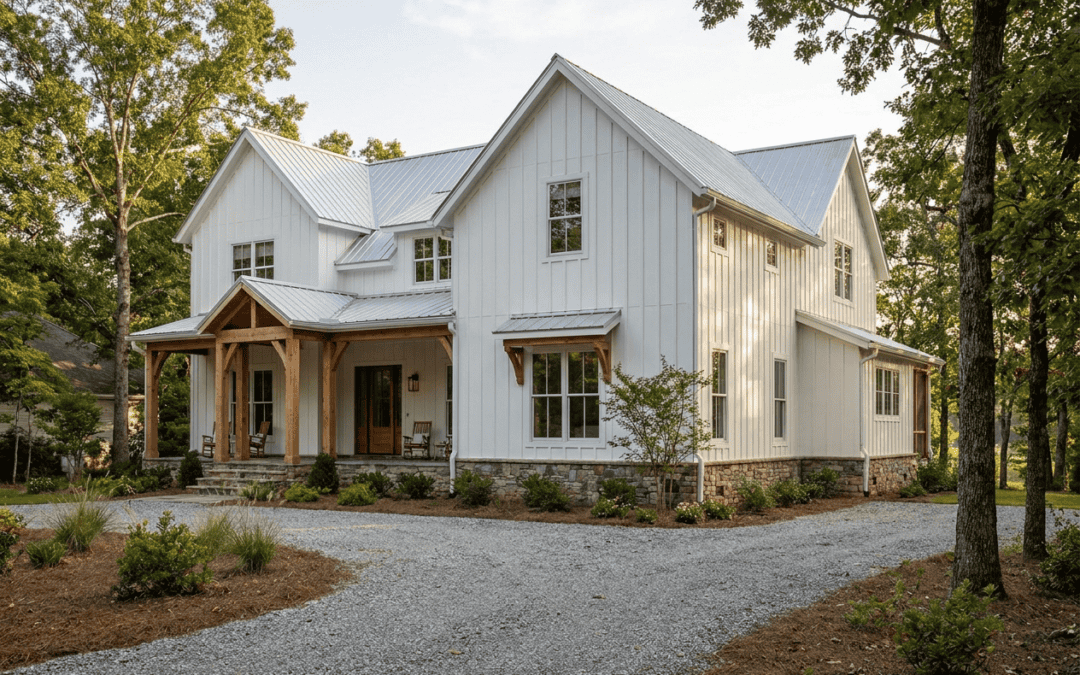
Board and batten siding adds height and definition without relying on heavy trim. But the profile is not the material. Wood, vinyl, fiber cement, and engineered wood can all create the look, with different maintenance, durability, and cost.
Board width, batten spacing, and placement determine whether the finished siding feels traditional, modern, or simply too busy.
What Is Board and Batten Siding?
Traditional board and batten uses wide vertical boards with narrower batten strips defining the seams. The form grew from barn siding used on barns, sheds, and country outbuildings, but residential versions are more refined.
Some systems use separate boards and strips. Others use a manufactured panel that creates the same vertical siding style. Board and batten siding is one type of vertical siding, not a material by itself.
Board and Batten Siding Materials and Design Tradeoffs
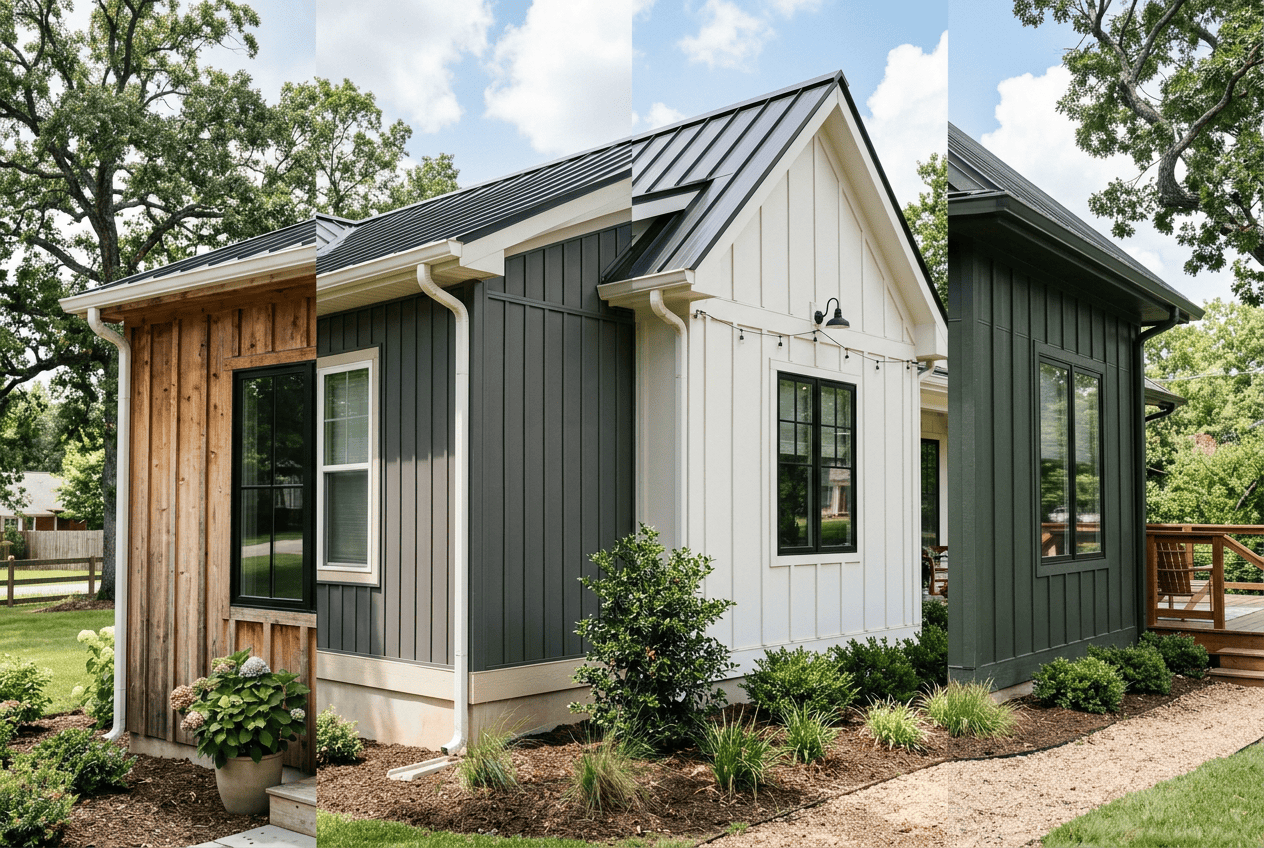
Material choice matters more than profile when it comes to upkeep. Real wood has the most authentic beauty and texture, but it also brings the most ongoing maintenance. Painted wood may need sealing or a repaint, and neglected moisture can lead to rot. For homeowners who want low maintenance siding for decades, traditional wood is usually the wrong call.
Fiber cement and engineered wood are more durable materials for homeowners who still want a substantial painted appearance. Properly installed fiber cement can withstand rain, snow, sun, termites, and changing weather better than untreated wood. Engineered wood keeps more of the wood aesthetic while using manufactured layers and protective treatments for consistency, protection, and longevity.
Vinyl Siding vs. Fiber Cement, Wood & Engineered Wood
Vinyl siding is easier to live with. It is low maintenance, relatively inexpensive, and a manufactured vinyl panel can achieve clean board-and-batten lines without the upkeep of natural wood. Vinyl siding also comes in factory colors and woodgrain textures, useful when comparing vinyl siding colors for the exterior.
Fiber cement is the premium choice when durability and a heavier appearance matter more than initial cost. Engineered wood offers more natural texture with less upkeep than traditional boards. No material is maintenance-free, and proprietary technology does not erase the need for correct flashing, clearances, and fastening.
Do not assume every manufactured panel behaves the same way. Vinyl, for example, expands and contracts as temperatures change, so the vinyl siding installation guidance from the Vinyl Siding Institute calls for fastening methods that leave room for panel movement rather than pinning the material tightly in place. Product-specific installation instructions matter more than marketing language about proprietary technology.
Board and Batten Benefits, Drawbacks, and Accent Use
The main benefits are curb appeal, versatility, and strong architectural definition. Board and batten can create a traditional farmhouse look, a cleaner modern board profile, or a restrained contemporary aesthetic depending on the spacing, materials, trim, and color.
The drawback is precision. Damaged vertical pieces can be tedious to replace, and sloppy installation shows quickly because misaligned battens, uneven seams, or bad trim interrupt the pattern. Installing board and batten siding well takes careful layout before the first panel or board goes on.
Full-house batten siding can look excellent on a simple form, but on a house with many rooflines, bump-outs, windows, and trim changes, it can become too much. Accent placement is often the better move. A gable, entry, garage, or upper story can achieve contrast without turning every elevation into a pattern.
Mixing board and batten with horizontal siding opens more design possibilities. That versatility is part of the style’s timeless charm, but restraint is what keeps the exterior from looking forced.
Batten Siding Cost, Installation, and Maintenance
Batten siding cost depends on materials, labor, wall complexity, trim, and coverage. Seams, caulk, flashing, and moisture-control elements must match product requirements. That extra labor is why the lowest installation bid is rarely the best choice.
Maintenance depends more on material than batten style. Painted wood needs the most attention; vinyl siding, fiber cement, and engineered wood reduce that workload. Moisture control behind the siding matters just as much as the visible finish. U.S. Department of Energy water-managed wall guidance explains that a drainage plane behind exterior cladding provides a path for water that gets past the siding to drain safely away from the wall.
The material also has more effect on long-term durability than the profile itself. That is worth remembering when determining whether a board and batten siding project should use wood, vinyl, fiber cement, or engineered wood.
Why Board and Batten Durability Depends on Material
A batten style does not make siding durable by itself. Material quality, flashing, fastening, and moisture control are what let the exterior withstand weather over time.
Board and Batten Curb Appeal
Good board and batten siding adds height, rhythm, and understated elegance. Bad proportions create visual noise, so extra decorative elements usually hurt more than they help.
Batten Siding Board Width, Siding Board Proportions, and Batten Spacing
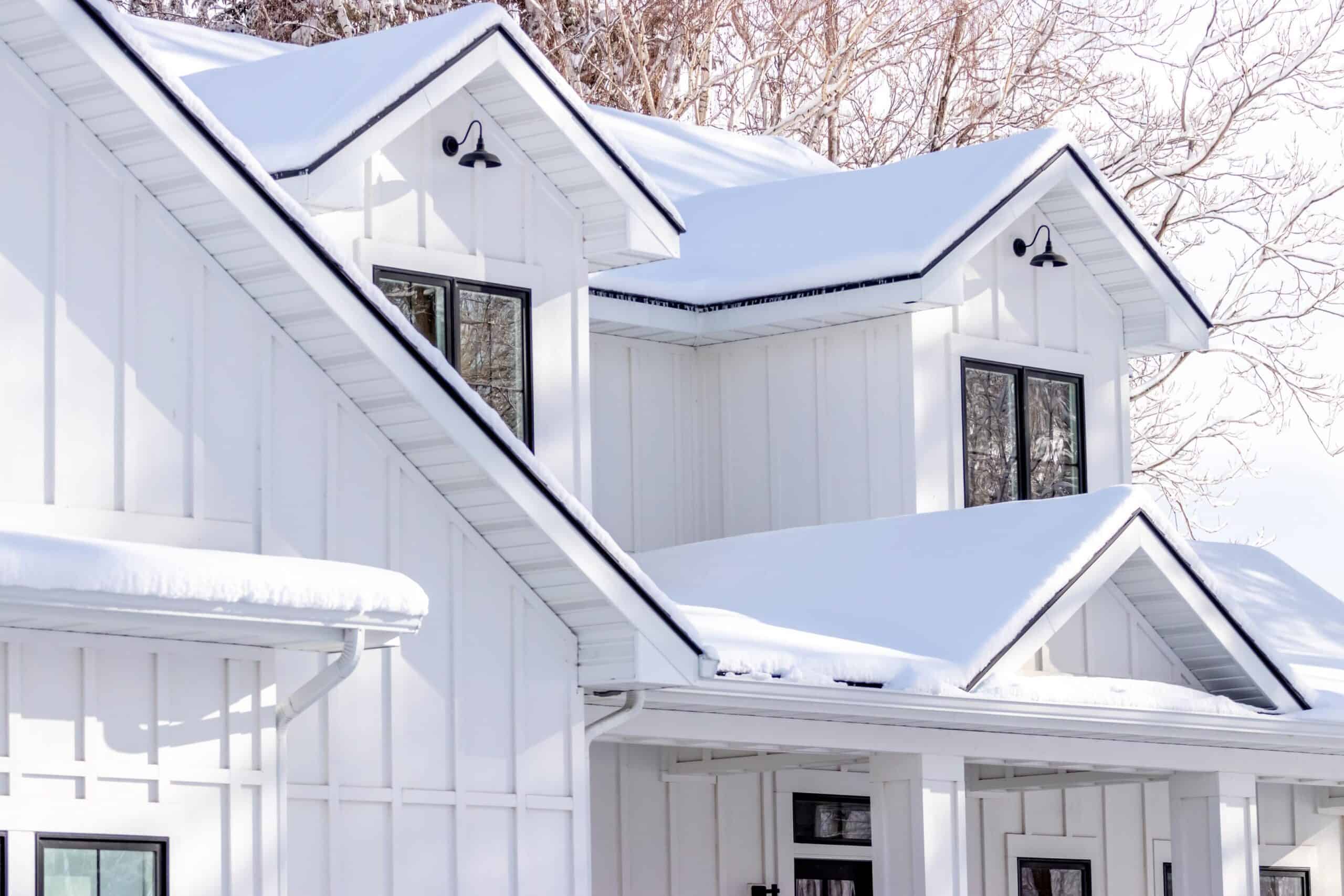
A common batten siding board layout may use battens roughly 2 to 3 inches wide with broader board areas around 10 to 12 inches. Those dimensions are not a design formula. The overall board-and-batten appearance depends on the relationship between each siding board, batten, and repeated seam across the wall.
Wider batten spacing creates a cleaner, more streamlined modern board-and-batten style. Tighter spacing adds texture and can make a large wall feel busier. The right proportions should suit the scale of the house, not just a sample board.
Is This Board and Batten Style Right for Your Home?
Homeowners should weigh architecture, maintenance tolerance, budget, and vertical emphasis. A sample board cannot show how batten siding will read at full scale.
Before hiring a siding contractor, ask which material fits the home and climate, how moisture will be handled, and whether full-house or accent placement makes more sense.